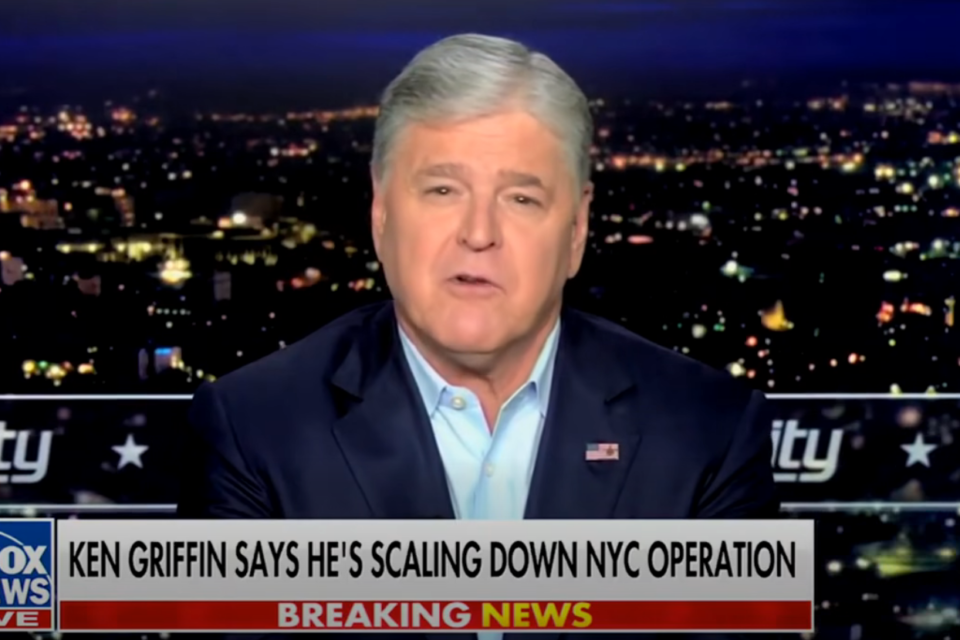
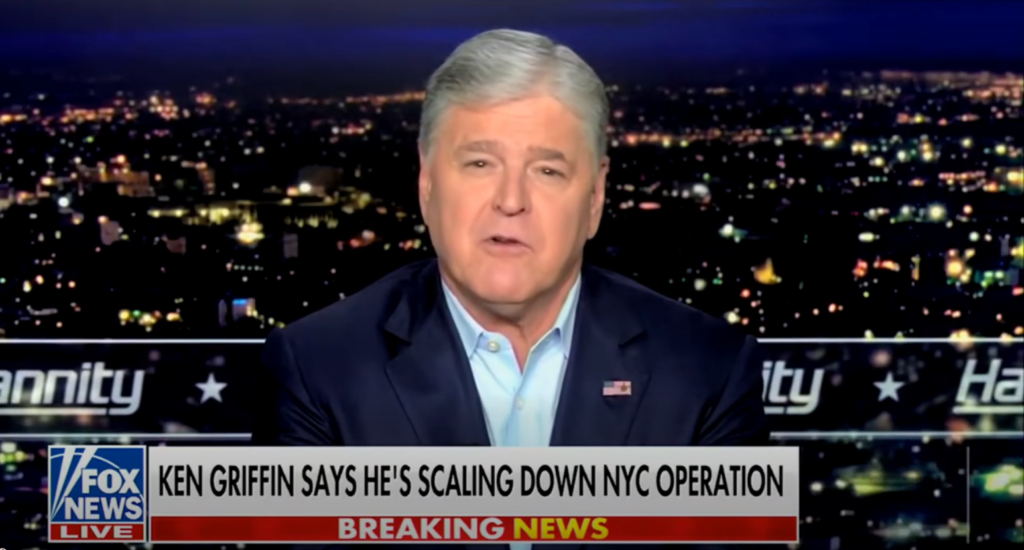
A fresh political and financial firestorm erupted this week after billionaire hedge fund titan Ken Griffin signaled that his company may dramatically scale back its expansion plans in New York City — and conservative media personality Sean Hannity quickly seized on the controversy as evidence that America’s financial elite are losing faith in the nation’s largest city.
The remarks came during a growing clash between Wall Street power brokers and New York Mayor Zohran Mamdani, whose aggressive “tax the rich” messaging has triggered backlash from some of the country’s wealthiest investors and executives. What began as a political disagreement has now evolved into a much larger national conversation about taxation, economic identity, public safety, and whether New York risks driving away the very industries that fuel its economy.
According to recent reports, Griffin criticized Mamdani after the mayor posted a viral video promoting a proposed luxury property tax while standing outside Griffin’s record-breaking Manhattan penthouse. Griffin reportedly described the video as “creepy and weird” and warned that the city was creating a hostile environment for business success.
The billionaire investor said the controversy reinforced his belief that Miami — not Manhattan — represents the future growth center for his empire. Citadel, Griffin’s hedge fund giant, has already shifted major operations to Florida in recent years after relocating its headquarters from Chicago. Now, observers say New York may be facing the next phase of that migration.
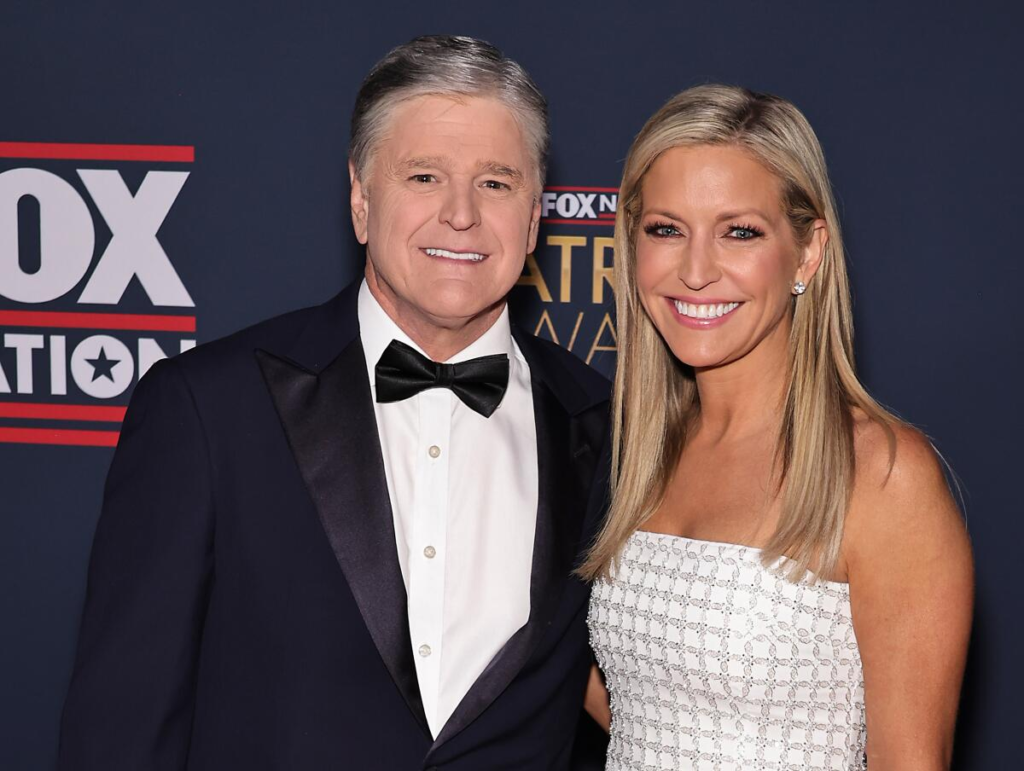
The timing of Griffin’s comments immediately caught the attention of Hannity, who has long argued that progressive economic policies are pushing businesses and wealthy taxpayers out of Democratic-run cities. On television and across conservative media circles, the situation was framed not merely as a corporate relocation story, but as a warning sign for the future of New York itself.
For Hannity and his allies, Griffin’s frustration fits into a broader narrative: cities that aggressively target high earners eventually risk losing jobs, investment, and tax revenue. Supporters of the mayor, however, see the issue very differently. They argue that billionaires have benefited enormously from economic systems that increasingly leave ordinary working families behind.
At the center of the controversy is Mamdani’s proposed “pied-à-terre” tax — an annual fee on luxury residences worth millions of dollars when those properties are not used as primary homes. In the mayor’s view, the policy is about fairness and affordability in a city where housing costs continue to soar.
Critics, however, believe the symbolic targeting of billionaire property owners sends a dangerous message to investors. Griffin himself suggested that the political rhetoric echoes the conditions that previously drove him away from Chicago.
During appearances at the 2026 Milken Institute Global Conference, Griffin reportedly said New York “doesn’t welcome success,” a phrase that quickly spread across financial media and political commentary shows.
For many on Wall Street, the comments landed like a thunderclap.
New York has long depended on its status as the financial capital of the world. Massive hedge funds, private equity firms, banks, and asset managers generate billions in taxes and support thousands of jobs throughout the city. The fear among business leaders is not simply that one billionaire may shift operations elsewhere — it is that a larger psychological shift could already be underway.
Reports suggest that Citadel may now prioritize future hiring and expansion in Miami instead of Manhattan. Meanwhile, other major financial firms are also reportedly exploring growth opportunities in Florida and Texas.
That possibility has intensified concerns among economists and business advocates who warn that even small relocations by elite financial firms can have outsized effects on local tax revenue.
Some estimates cited in recent reporting claim that losing only a few thousand finance-sector jobs could cost New York hundreds of millions in annual revenue.
Supporters of Mamdani dismiss those fears as exaggerated political theater. They argue that wealthy investors have repeatedly threatened to leave high-tax states for decades while still continuing to profit enormously from New York’s infrastructure, markets, and global influence.
The mayor’s office has insisted that the goal is not to punish success but to reform what it describes as a deeply unequal tax structure. In public remarks, Mamdani stated that “working people are pushed to the brink” while extreme wealth continues to receive favorable treatment.
Yet the political optics remain explosive.
Griffin is not simply another wealthy businessman. He is one of the most influential hedge fund figures in the world, with enormous visibility in finance, philanthropy, and politics. His decision to openly criticize New York’s leadership has amplified fears that corporate confidence in the city may be weakening.
Conservative commentators including Hannity have used the dispute to reinforce long-running criticisms of progressive urban leadership. Hannity has repeatedly praised Florida’s lower-tax model and highlighted the migration of wealthy executives and companies to the state. Recent media appearances involving Florida Governor Ron DeSantis also emphasized Florida’s appeal to major business leaders and investors.
Miami, in particular, has emerged as a symbolic rival to New York in the competition for financial prestige. Once viewed mainly as a tourism and real estate hub, the city has aggressively marketed itself as a business-friendly destination with lower taxes and fewer regulatory pressures.
Griffin has become one of the most recognizable faces of that transformation.
His expanding Miami presence has already helped attract financial talent, investment firms, and luxury development projects to South Florida. To supporters, it represents a vision of economic growth free from what they see as excessive government hostility toward wealth creation.
To critics, however, the billionaire backlash reveals something else entirely: the immense political influence that ultra-wealthy individuals can wield when public officials attempt to challenge inequality.
The conflict also reflects a deeper cultural divide in America.
On one side are voters and activists who believe billionaires should contribute far more toward housing, healthcare, infrastructure, and social services. On the other are investors and business leaders who argue that punishing success ultimately weakens economic growth and job creation.
New York now finds itself directly at the center of that battle.
And while Griffin has not announced a full withdrawal from the city, the symbolism of his remarks may matter almost as much as the business decisions themselves. Wall Street thrives not only on numbers, but on confidence, momentum, and perception.
If enough executives begin to believe New York is becoming hostile to finance, even incremental shifts could reshape the city’s future over time.
Meanwhile, Hannity and conservative media figures are likely to continue using the controversy as a powerful political example heading into future national debates over taxation and economic policy.
Whether Griffin’s warnings represent genuine economic danger or simply another chapter in America’s endless culture war remains fiercely contested.
But one thing is clear: the clash between billionaires, politicians, and media powerhouses is no longer just about one penthouse, one mayor, or one hedge fund.
It has become a battle over the identity of America’s biggest cities — and over who ultimately gets to shape their future.