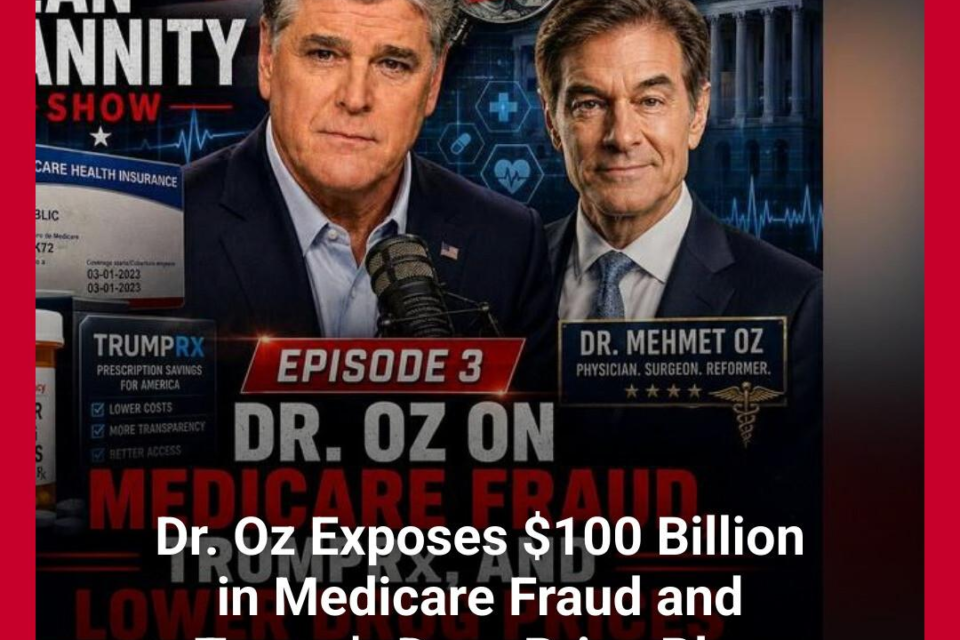
A fiery new interview between Sean Hannity and Dr. Mehmet Oz is generating intense national debate after the two discussed what Dr. Oz described as widespread fraud and abuse inside several of America’s largest public health-care programs.
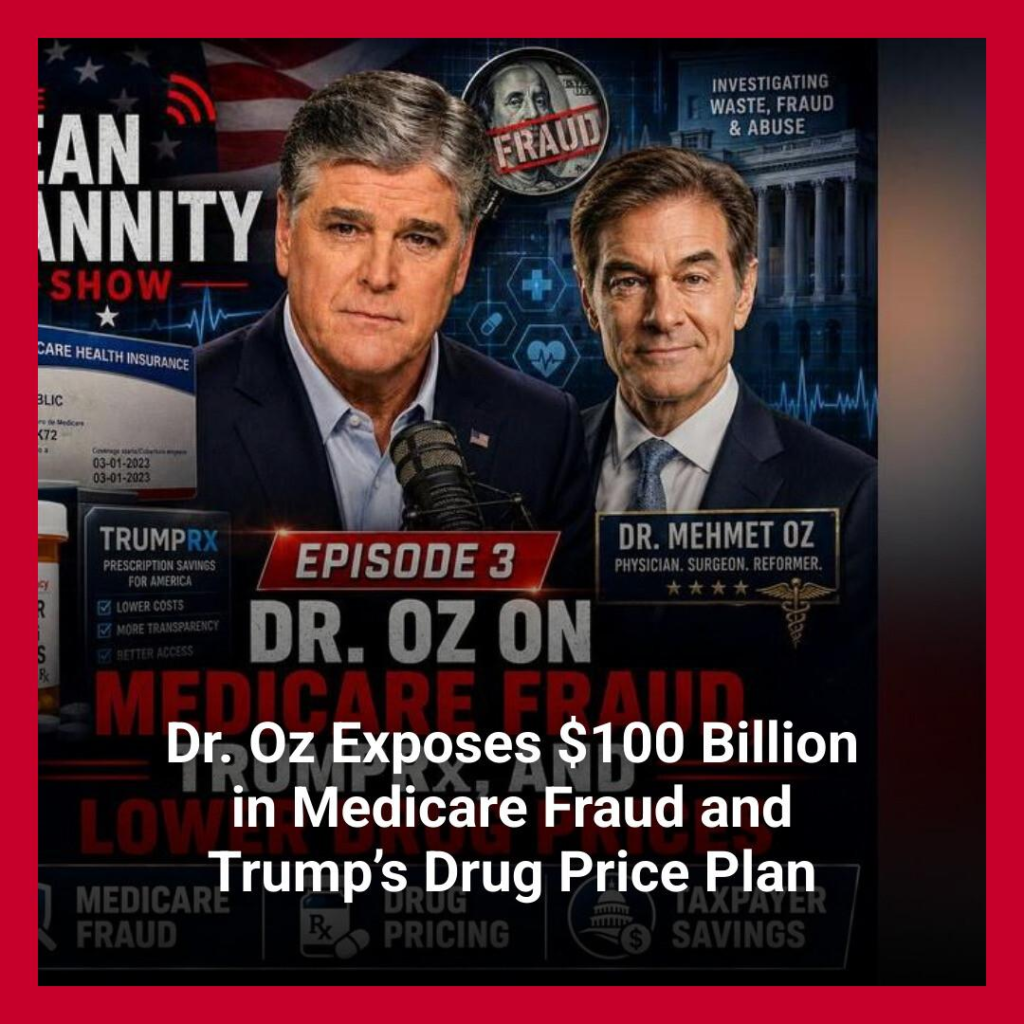
During the final hour of Hannity’s broadcast, the conversation quickly shifted from routine policy discussion into a sweeping examination of alleged corruption involving Medicare, Medicaid, Obamacare exchanges, hospice services, home health care providers, and personal care assistance programs. According to Dr. Oz, fraudulent billing schemes and abuse of taxpayer dollars may be occurring on a scale far larger than most Americans realize.
The interview immediately sparked strong reactions online, with supporters calling the discussion a long-overdue exposé while critics accused the segment of oversimplifying deeply complex problems within the health-care system.
Still, one thing became clear by the end of the exchange: concerns about fraud inside federal health-care programs are once again at the center of political conversation in America.
“This Is Organized Theft”
Throughout the interview, Dr. Oz argued that many Americans underestimate how sophisticated modern health-care fraud operations have become. He claimed some criminal networks are exploiting weaknesses in federal reimbursement systems by billing for services that were never performed, exaggerating medical needs, or creating elaborate patient referral pipelines designed purely to maximize government payouts.
“This isn’t just paperwork mistakes,” Dr. Oz reportedly explained during the segment. “In many cases, this is organized theft targeting taxpayer-funded systems.”
Among the areas he highlighted most aggressively were hospice care and home health-care services — sectors that have faced growing scrutiny from investigators in recent years due to rapid spending growth and concerns over improper billing practices.
According to Oz, some fraudulent operations allegedly recruit vulnerable patients, falsify diagnoses, or pressure providers into certifying unnecessary services in order to collect federal reimbursements. He argued that these abuses drain billions from programs originally designed to support seniors, low-income Americans, and people with disabilities.
Why Medicare and Medicaid Fraud Matters

Experts across multiple administrations — Republican and Democrat alike — have acknowledged for years that fraud remains a serious issue within federal health-care spending. Because Medicare and Medicaid collectively handle enormous amounts of money and process millions of claims every day, oversight becomes extraordinarily difficult.
Government watchdog agencies have repeatedly warned that criminal groups often target health-care systems because the complexity of billing codes and reimbursement structures creates opportunities for abuse.
Fraud investigations have uncovered cases involving fake clinics, unnecessary medical equipment billing, phantom home visits, and staged patient records. In some high-profile prosecutions, operators allegedly billed taxpayers for treatments involving patients who were deceased or had never even visited the facilities involved.
Supporters of Oz say his comments reflect frustration inside the system itself — frustration over bureaucratic obstacles, fragmented oversight, and the sheer scale of federal health spending.
Critics Push Back
Not everyone agreed with the tone or framing of the interview.
Critics argued that discussions about fraud can sometimes unintentionally undermine public trust in programs that millions of Americans depend on for survival. Advocacy groups warned against painting entire sectors such as hospice or home health care with broad accusations when the overwhelming majority of providers operate legally and ethically.
Some health policy analysts also pointed out that fraud estimates are notoriously difficult to calculate precisely. While improper payments and suspicious billing absolutely exist, determining how much stems from intentional criminal fraud versus administrative error can be complicated.
Others accused Hannity and Oz of using emotionally charged language to fuel political narratives surrounding government spending and health-care reform.
Still, even many critics acknowledged that fraud prevention remains a legitimate issue requiring stronger oversight.
The Political Stakes Are Enormous
The timing of the discussion is especially significant because health-care spending is rapidly becoming one of the biggest financial pressures facing the federal government.
Programs like Medicare and Medicaid account for massive portions of annual federal expenditures, and concerns about long-term sustainability continue growing as America’s population ages. Any claims involving large-scale waste, abuse, or fraudulent billing naturally become politically explosive because they intersect with debates over taxes, deficits, entitlement reform, and public trust.
For conservatives, the interview reinforced arguments that federal systems often suffer from weak accountability and bureaucratic inefficiency. Many viewers praised Hannity for giving Oz a platform to discuss what they see as a crisis hidden beneath layers of government complexity.
Meanwhile, progressive critics warned that focusing too heavily on fraud narratives can sometimes be used to justify cuts or restrictions that ultimately harm legitimate patients who rely on these services.
Hospice and Home Care Under the Microscope
One particularly emotional portion of the discussion centered around hospice and personal care services.
Hospice care is intended to provide comfort and support for terminally ill patients nearing the end of life. Because eligibility rules can involve subjective medical judgments about prognosis and care needs, regulators have long considered hospice vulnerable to abuse by dishonest providers seeking reimbursement.
Similarly, home health and personal care programs often involve services delivered outside traditional clinical environments, making direct oversight more difficult.
Dr. Oz argued that some fraudulent actors exploit these gray areas by exaggerating patient conditions or billing for care that never actually occurred.
“These programs exist to help vulnerable people,” he said during the interview. “When criminals exploit them, they’re stealing from patients as much as taxpayers.”
That statement quickly circulated online, drawing both praise and criticism depending on political perspective.
Public Reaction Explodes Online
Following the broadcast, clips from the interview spread rapidly across social media platforms. Supporters applauded what they described as rare honesty about government waste, with many commenters demanding tougher investigations and criminal prosecutions.
Others shared personal stories involving suspicious billing issues or questionable medical practices they claimed to have witnessed firsthand.
Critics, however, accused the segment of creating fear around programs that millions depend upon daily. Some argued that sensational coverage risks discouraging vulnerable patients from seeking necessary care out of anxiety or mistrust.
The divide reflected America’s broader political polarization around health care itself — a topic that consistently ranks among the most emotionally charged issues in public life.
A Debate That Is Far From Over
Whether viewers agreed with Hannity and Dr. Oz or not, the interview succeeded in reigniting national conversation about oversight, accountability, and transparency inside America’s health-care system.
Few experts deny that fraud exists. The real debate centers on scale, solutions, and how to protect both taxpayers and patients simultaneously without undermining access to care.
As investigations continue across various sectors of federal health programs, pressure is likely to increase on lawmakers and administrators to demonstrate that public funds are being monitored responsibly.
For now, the explosive conversation between Sean Hannity and Dr. Mehmet Oz has once again pushed one uncomfortable question into the national spotlight:
How much fraud is really hiding inside America’s multitrillion-dollar health-care system — and who will be held accountable if those allegations prove true?