In an age where viral headlines can travel faster than facts, it didn’t take long for the internet to erupt over a sensational claim: rock legend Steven Tyler was allegedly launching a billion-dollar aviation company called “Tyler Air.” The story spread like wildfire across social media platforms, racking up millions of views, shares, and heated debates within hours. To some, it sounded like a bold and eccentric move befitting one of rock’s most flamboyant figures. To others, it raised immediate red flags.
But as the dust begins to settle, a closer look reveals a very different reality—one that underscores the growing problem of misinformation in the digital era.
The Birth of a Viral Sensation
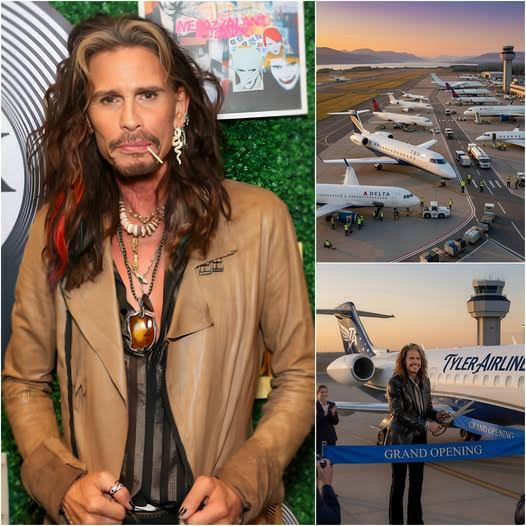
The rumor appears to have originated from a combination of doctored images, vague blog posts, and cleverly edited video clips. Several posts claimed that Tyler had quietly assembled a team of investors and aerospace engineers to create a luxury airline brand that would “redefine elite travel.” The supposed company, “Tyler Air,” was described as a hybrid between a private jet service and a high-end lifestyle brand, targeting celebrities and ultra-wealthy clientele.
Adding fuel to the fire were fabricated “leaked” photos showing aircraft emblazoned with Tyler’s signature scarf aesthetic—flowing fabrics seemingly attached to jet wings. The imagery was bizarre, theatrical, and oddly convincing to fans familiar with Tyler’s over-the-top persona.
Within hours, hashtags like #TylerAir and #StevenTylerBillionaire began trending.
Why People Believed It
At first glance, the claim didn’t seem entirely impossible. Steven Tyler has long been known not only for his musical career but also for his ventures into fashion, television, and philanthropy. From his time as a judge on American Idol to launching his own line of scarves and accessories, Tyler has consistently demonstrated a flair for reinvention.
In a culture that celebrates celebrity entrepreneurship—think actors launching tequila brands or musicians investing in tech startups—the idea of Tyler entering aviation didn’t feel completely outlandish.
There was also the “billion-dollar” hook. Big numbers draw attention, and attaching such a massive valuation to the rumor gave it an air of credibility, even if no concrete financial data was provided.
The Cracks Begin to Show
However, as journalists and fact-checkers began digging deeper, inconsistencies quickly emerged.
First, there was no official business registration for any entity named “Tyler Air” linked to Steven Tyler. No filings, no trademarks, no corporate announcements—nothing that would typically accompany a venture of this scale.
Second, none of Tyler’s verified social media accounts mentioned the project. For a celebrity known to engage with fans and promote his endeavors, this silence was telling.
Third, major aviation and business news outlets had no record of the supposed investment. In an industry where billion-dollar developments rarely go unnoticed, the absence of credible reporting raised serious doubts.
The Role of AI and Digital Manipulation
One of the more unsettling aspects of the “Tyler Air” rumor is how convincingly it was presented. Experts suggest that a combination of AI-generated images and edited video clips played a significant role in making the story believable.
Some videos featured what appeared to be Tyler discussing “new horizons” and “taking fans to the skies,” but upon closer inspection, these clips were stitched together from unrelated interviews. Context was stripped away, and new narratives were built around existing footage.

This highlights a broader issue: as technology evolves, so does the sophistication of misinformation. It’s no longer just about fake text posts—visual and audio manipulation can create entirely fabricated realities.
Celebrity Culture and the Business Illusion
The “Tyler Air” saga also taps into a deeper cultural phenomenon: the expectation that celebrities are constantly expanding their empires.
In recent years, the line between entertainer and entrepreneur has blurred significantly. Fans are accustomed to seeing their favorite stars launch everything from skincare lines to cryptocurrency ventures. This normalization makes it easier for outlandish claims to slip through the cracks.
But there’s a key difference between plausible diversification and baseless speculation. While Steven Tyler has indeed explored various creative avenues, there’s no evidence to suggest he has any involvement in aviation—an industry that requires immense capital, regulatory approval, and technical expertise.
The Psychology of Viral Misinformation
Why do stories like this spread so quickly?
Part of the answer lies in human psychology. Sensational headlines trigger curiosity and emotional reactions, prompting people to share before verifying. The combination of a famous name, a surprising claim, and visually engaging content creates the perfect storm for virality.
There’s also the element of “wishful thinking.” Fans may want to believe that their favorite artist is embarking on an exciting new venture, especially one as imaginative as a luxury airline.
Unfortunately, this eagerness can come at the cost of critical thinking.
Responses from Fans and Media
As skepticism grew, reactions began to shift. Some fans expressed disappointment, feeling misled by the initial reports. Others took a more humorous approach, joking about what a Tyler-branded airline might look like—complete with rock music blasting during takeoff and flight attendants wearing glittering outfits.
Media outlets, meanwhile, started publishing debunking articles, pointing out the lack of evidence and tracing the origins of the rumor. These efforts helped slow the spread, but not before the story had already reached a massive audience.
The Silence from Steven Tyler
Interestingly, Steven Tyler himself has not publicly addressed the “Tyler Air” rumor. This silence could be strategic—acknowledging every false claim can sometimes amplify it further.
Alternatively, it may simply reflect the reality that celebrities are often the subject of countless rumors, many of which fade away on their own.
Regardless, the absence of confirmation from Tyler is perhaps the clearest indication that the story lacks substance.
Lessons from the “Tyler Air” Phenomenon
The rapid rise and fall of the “Tyler Air” rumor offers several important takeaways:
1. Verification Matters
Before sharing or believing a claim, it’s worth checking whether it comes from a credible source. Official announcements, reputable news outlets, and verifiable data are key indicators of authenticity.
2. Visual Content Isn’t Always Reliable
Images and videos can be manipulated. Just because something looks real doesn’t mean it is.
3. Celebrity ≠ Infinite Possibility
While celebrities often explore diverse ventures, not every viral claim about them is grounded in reality.
4. Critical Thinking Is Essential
In a digital landscape flooded with information, the ability to question and analyze is more important than ever.
A Reflection of the Times
Ultimately, the “Tyler Air” story is less about aviation and more about the current state of information consumption. It illustrates how quickly narratives can be constructed, amplified, and believed—even in the absence of evidence.
For Steven Tyler, it’s just another chapter in a long career filled with headlines—some true, some exaggerated, and some entirely fictional.
For the rest of us, it’s a reminder to look beyond the surface, question what we see, and resist the urge to take every viral claim at face value.
Because in today’s world, not everything that trends is true—and sometimes, the most shocking stories are the ones that fall apart the fastest.