In a world where musical collaborations often chase trends, algorithms, and fleeting virality, there are rare moments when something quieter—and far more enduring—emerges. The pairing of Andrea Bocelli and Sofia Carson delivered exactly that: a duet that didn’t just sound beautiful, but felt timeless.
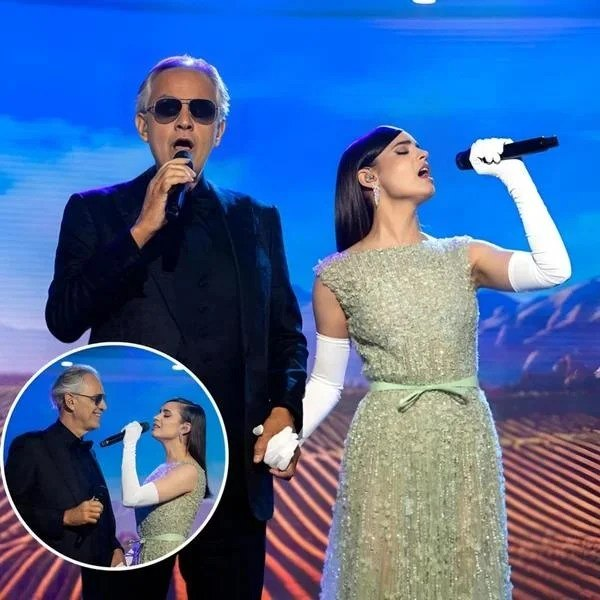
It wasn’t merely a meeting of voices. It was a meeting of eras, disciplines, and emotional languages—one rooted in classical tradition, the other shaped by contemporary pop sensibility. And somehow, instead of clashing, they blended into something unexpectedly seamless.
Two Worlds, One Stage
Andrea Bocelli has long stood as one of the most recognizable voices in classical and crossover music. With a career spanning decades, his tenor has filled opera houses, arenas, and global broadcasts with a sense of grandeur that few artists can replicate. His music carries a certain weight—an emotional gravity that feels almost sacred.
Sofia Carson, by contrast, represents a newer generation. Known for her work in film and music, she has cultivated a style that bridges cinematic storytelling with modern pop. Her voice, while lighter in tone, carries clarity and emotional precision.
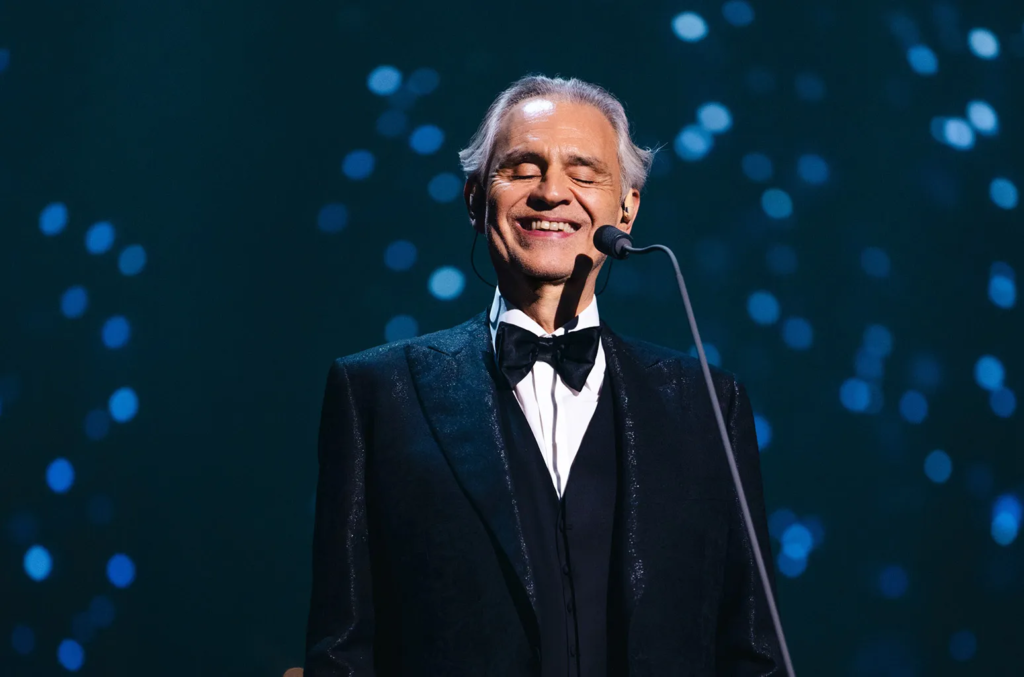
On paper, the collaboration might have seemed unlikely. But in execution, it revealed something deeper: a shared commitment to storytelling through music.
The Sound of Restraint and Emotion
What made the duet so striking wasn’t vocal power alone—it was restraint.
Bocelli, known for his soaring high notes and operatic intensity, approached the performance with a measured elegance. He allowed space—space for the melody, for the lyrics, and crucially, for Carson’s voice to shine.
Carson, in turn, resisted the temptation to overreach. Rather than trying to match Bocelli note for note, she leaned into her strengths: softness, phrasing, and emotional nuance.
The result was a conversation rather than a competition.
Each line felt intentional. Each pause carried meaning. And together, they created a sound that felt less like a performance and more like a shared moment.
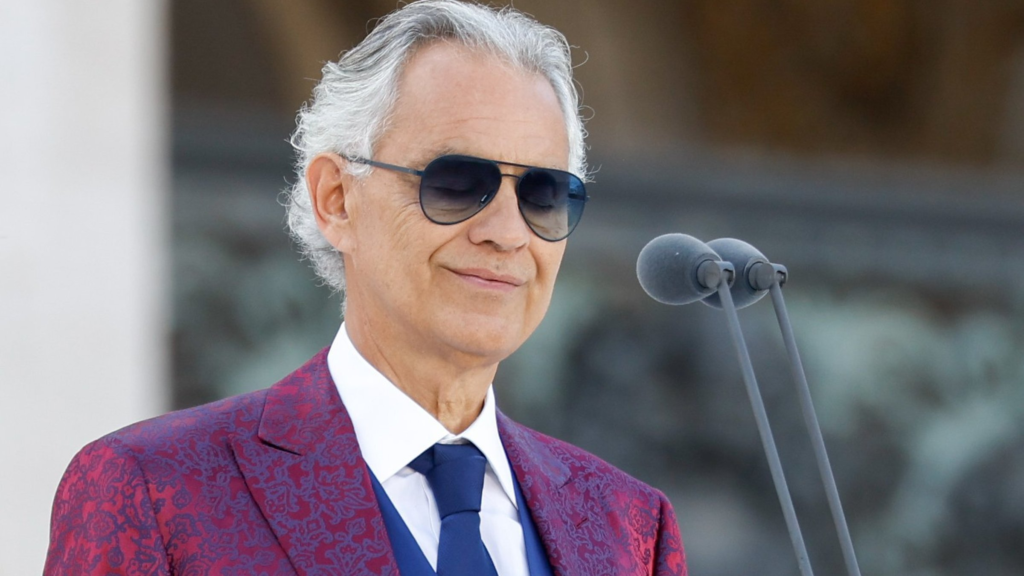
A Visual and Emotional Atmosphere
Equally important was the setting in which the duet unfolded. Whether staged in a grand concert hall or captured in an intimate performance setting, the visual presentation complemented the music’s tone.
Lighting was often warm, understated—never distracting. The focus remained on the voices, the expressions, the subtle exchanges between the two performers.
There was a noticeable absence of spectacle. No overwhelming choreography. No excessive production. Just two artists, standing side by side, letting the music speak.
In an era of sensory overload, that simplicity felt almost radical.
Why It Resonated
Audiences responded immediately—and deeply.
Part of that reaction can be attributed to nostalgia. Bocelli’s voice carries with it decades of memory for many listeners. Hearing it alongside a younger artist created a bridge between past and present.
But nostalgia alone doesn’t sustain emotional impact.
What truly resonated was authenticity. The duet didn’t feel engineered for charts or streaming numbers. It felt sincere—like a piece of music that existed because it needed to be expressed, not because it needed to perform commercially.
Listeners often describe such experiences as “timeless” not because they sound old, but because they feel untouched by time.
The Art of Balance
One of the most difficult aspects of any duet is balance—especially when the artists come from different musical traditions.
Lean too far in one direction, and the other voice becomes overshadowed. Try too hard to equalize, and both voices risk losing their identity.
What Bocelli and Carson achieved was a delicate equilibrium.
Bocelli brought depth, resonance, and a sense of history. Carson brought clarity, freshness, and emotional accessibility. Neither compromised. Instead, they adapted—just enough—to meet each other in the middle.
That balance is what gave the performance its lasting quality.
A Broader Significance
Beyond the immediate beauty of the duet, there’s a larger cultural significance worth noting.
Collaborations like this challenge the boundaries we often place around genres. Classical and pop are frequently treated as separate worlds, each with its own audience and expectations. But moments like this remind us that music, at its core, is universal.
Emotion doesn’t belong to a genre. Neither does storytelling.
By bringing their distinct styles together, Bocelli and Carson didn’t just create a song—they created a space where different audiences could meet.
The Quiet Power of Simplicity
Perhaps the most remarkable aspect of the duet is how little it relies on excess.
There are no dramatic twists. No vocal acrobatics designed to impress. No attempts to dominate the listener’s attention.
Instead, it invites.
It invites you to listen closely. To feel rather than analyze. To sit with the music rather than rush past it.
In doing so, it achieves something rare: it slows time.
A Moment That Lingers
Long after the final note fades, what remains is not just the memory of a beautiful performance, but a feeling.
A sense of calm. Of connection. Of having witnessed something genuine.
In a musical landscape often driven by speed and saturation, those moments are increasingly valuable.
They remind us why we listen in the first place.
Conclusion
The duet between Andrea Bocelli and Sofia Carson stands as a testament to what can happen when artists prioritize emotion over spectacle, and connection over contrast.
It didn’t need to be loud to be powerful.
It didn’t need to be complex to be profound.
It simply needed to be honest.
And in that honesty, it found something timeless.