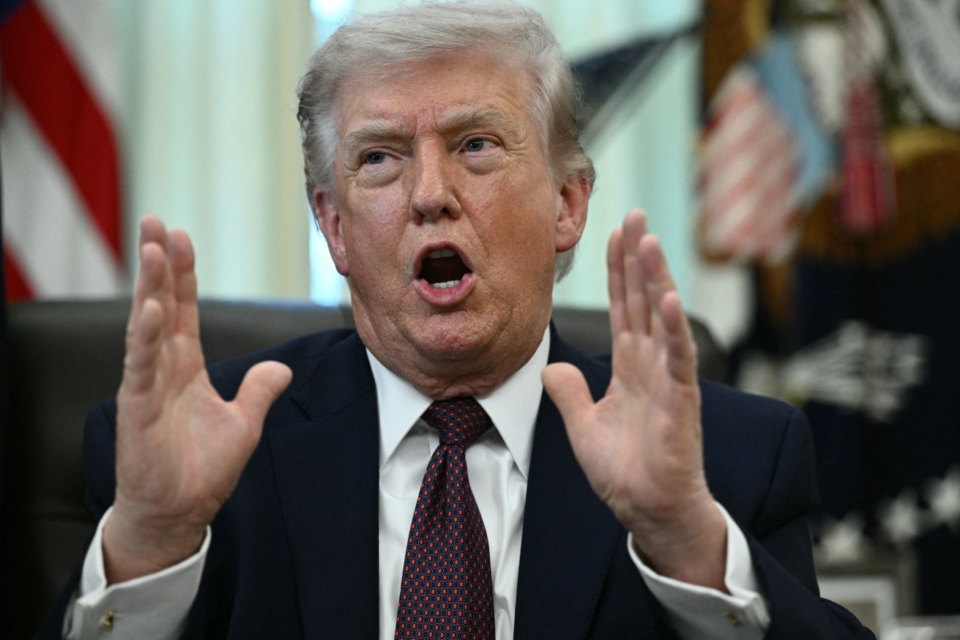
A single sentence can reshape a conversation.
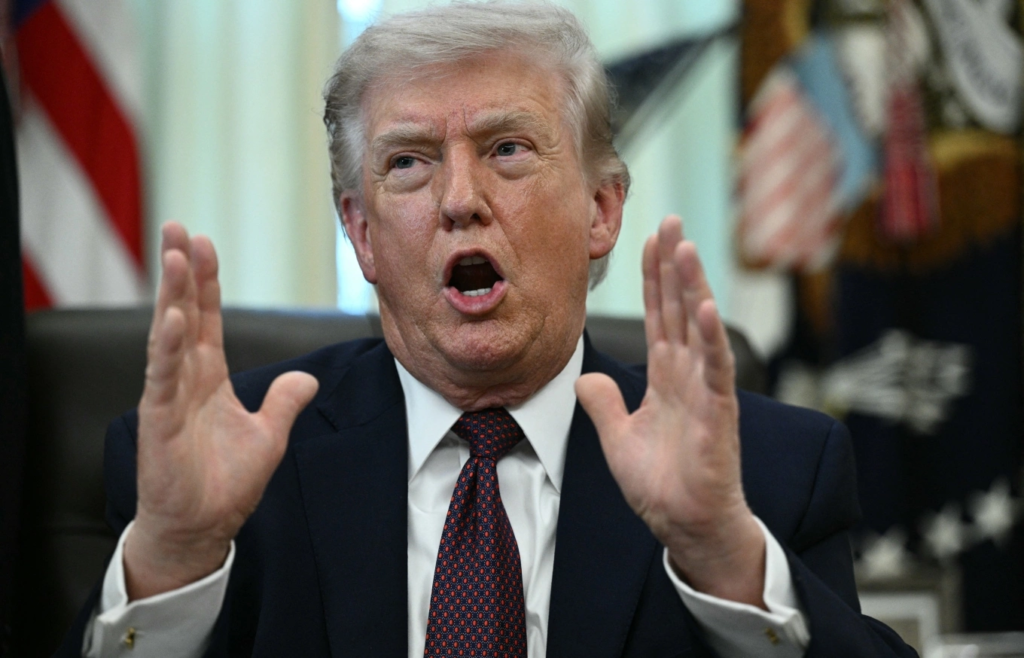
Sometimes it clarifies.
Sometimes it provokes.
And sometimes—it does both at once.
That is exactly what happened when Donald Trump declared:
“We have eviscerated Iran in just 32 days.”
The statement spread rapidly, igniting debate across political circles, media platforms, and international observers. It was bold, absolute, and unmistakably Trump—framed not as an analysis, but as a conclusion.
But as the words echoed beyond the moment they were spoken, a deeper conversation began to unfold.
What did he mean?
What actually happened?
And perhaps most importantly—why does the world still feel anything but stable?
A Statement That Demands Attention
Trump’s remark was not delivered in isolation. It came during a broader discussion about geopolitical tensions and U.S. strategy in the Middle East—topics that have long been central to his political messaging.
By using the word “eviscerated,” he chose language that conveys total dominance. Not partial success. Not strategic progress. But overwhelming, decisive impact.
And the timeline—“just 32 days”—adds another layer.
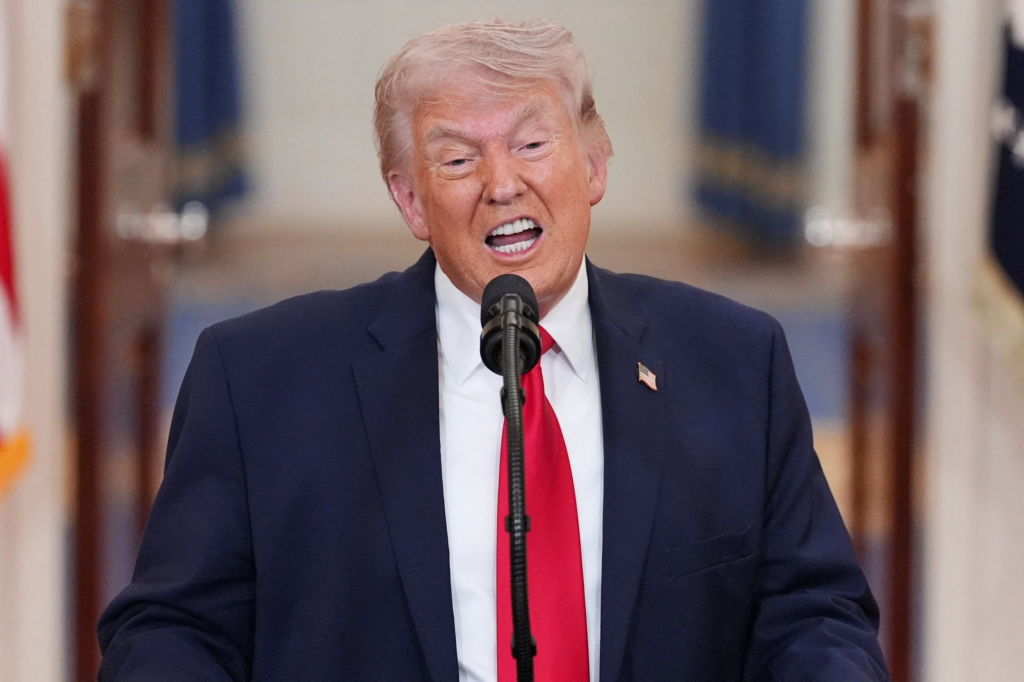
It suggests speed.
Efficiency.
Control.
In a world where conflicts often stretch for years, even decades, the idea of a rapid, decisive outcome carries powerful appeal.
But it also raises immediate questions.
Amplified on Air: The Sean Hannity Effect
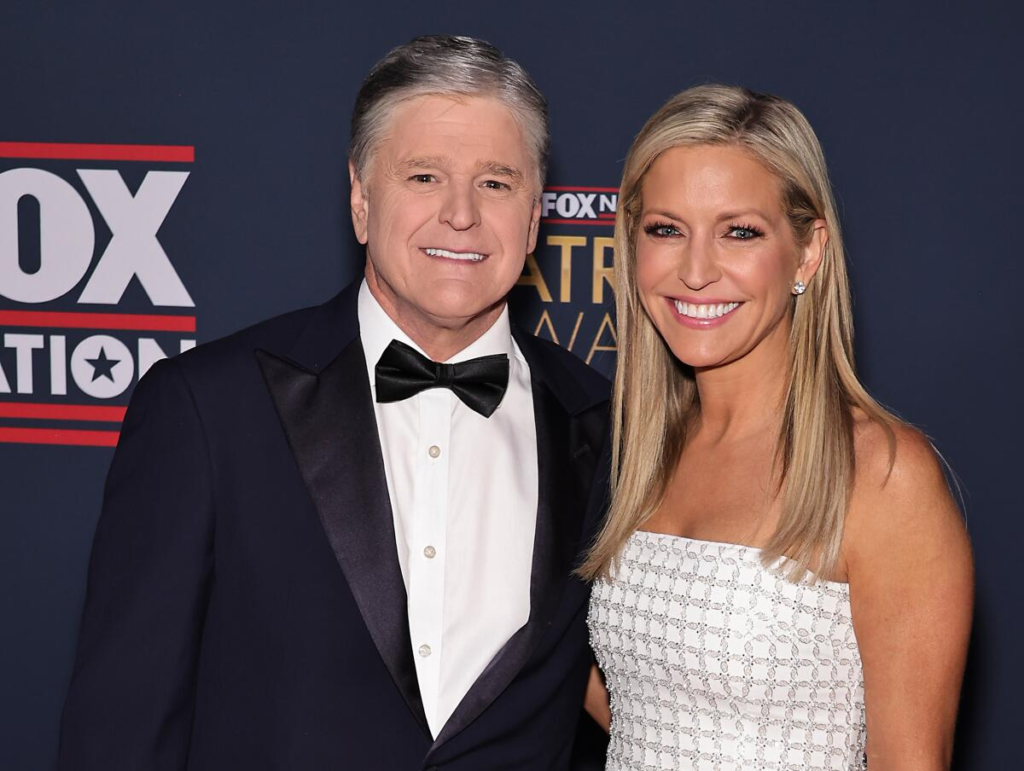
The message gained even more traction after being discussed on the show of Sean Hannity, one of the most influential voices in conservative media.
On his platform, the tone surrounding the claim became even more assertive.
The narrative was clear:
This was not just a strategic move—it was a turning point.
A moment of strength.
A demonstration of what decisive leadership could achieve.
For viewers already inclined to support Trump’s approach, the message resonated strongly. It reinforced a worldview in which bold action leads to clear results—and where traditional caution is seen as weakness.
But outside that audience, reactions were far more mixed.
The Immediate Pushback
Critics were quick to challenge both the wording and the implications of Trump’s statement.
They argued that:
- The term “eviscerated” is exaggerated and lacks clear definition in geopolitical terms
- No widely confirmed reports support such a rapid and total outcome
- The situation involving Iran remains complex and unresolved
For them, the statement was less about describing reality and more about shaping perception.
A rhetorical move.
A narrative designed to project strength.
And in modern politics, narrative can be as influential as fact.
The Reality of Modern Conflict
One of the key reasons Trump’s statement sparked so much debate is that it appears to conflict with how modern conflicts typically unfold.
Geopolitical tensions—especially those involving countries like Iran—are rarely simple.
They involve:
- Military strategy
- Economic sanctions
- Diplomatic negotiations
- Regional alliances
- Internal political dynamics
These factors interact in ways that make quick, definitive outcomes extremely rare.
Even when significant progress is made, it often comes with ongoing uncertainty.
Which leads to a critical question:
If the situation has truly been resolved so decisively, why does the world still feel on edge?
Signals from the Global Stage
In the days following Trump’s statement, global indicators told a more complicated story.
Markets remained sensitive.
Energy prices fluctuated.
International leaders continued to speak cautiously about stability in the region.
These signals suggest that, regardless of political messaging, the situation is still evolving.
And in geopolitics, perception and reality do not always move in sync.
The Power of Language
Trump has long been known for his use of strong, memorable language.
Words like “tremendous,” “disaster,” and “historic” have become part of his communication style.
“Eviscerated” fits that pattern.
It’s not a technical term.
It’s not neutral.
It’s designed to create an impression—immediate and visceral.
And it works.
Because in a crowded media environment, attention is currency.
And statements like this command attention.
Supporters See Strength
For Trump’s supporters, the statement reinforces a familiar narrative:
That strong leadership produces results.
That decisive action is more effective than prolonged deliberation.
That boldness is not just a style—but a strategy.
From this perspective, the exact details matter less than the overall message.
What matters is the idea of control.
Of momentum.
Of winning.
Critics See Oversimplification
On the other side, critics argue that such statements risk oversimplifying complex realities.
They warn that:
- Overstating success can lead to misunderstandings about actual conditions
- Simplified narratives can obscure important risks
- Public perception may become disconnected from on-the-ground developments
For them, the concern is not just about accuracy—but about consequences.
Because in international affairs, perception can influence decisions.
And decisions can have real-world impact.
Media, Messaging, and Momentum
The role of media in amplifying statements like this cannot be ignored.
Platforms like Sean Hannity’s show serve as powerful channels for shaping how messages are received.
They provide context, interpretation, and emphasis.
And in doing so, they help transform a single statement into a broader narrative.
This is not unique to one political side—it is a feature of modern media ecosystems.
But it does highlight how information spreads—and how it evolves as it moves.
The Gap Between Claim and Clarity
Perhaps the most striking aspect of this entire episode is the gap between the certainty of the claim and the uncertainty of the situation.
On one side:
A clear, confident statement of victory.
On the other:
A complex, ongoing global reality.
Bridging that gap requires more than headlines.
It requires analysis, verification, and time.
Why This Moment Matters
Beyond the specifics of Iran or any particular policy, this moment reflects broader trends in how political communication works today.
- Speed over depth: Statements spread faster than they can be analyzed
- Emotion over nuance: Strong language captures attention more effectively than careful explanation
- Narrative over detail: The story often matters more than the specifics
Trump’s statement—and the reaction to it—fits squarely within this pattern.
The Question That Remains
As the debate continues, one question lingers:
What really happened in those 32 days?
Was it a decisive shift?
A strategic success?
A rhetorical framing of a more complex situation?
The answer is likely not simple.
And it may not be immediate.
Conclusion: Between Confidence and Uncertainty
Donald Trump’s claim that Iran was “eviscerated in just 32 days” is more than just a statement.
It is a reflection of how modern politics communicates power.
Boldly.
Quickly.
And often without waiting for consensus.
But as the world continues to watch developments unfold, the contrast between certainty and complexity remains.
Because in global affairs, few things are ever as simple as they sound.
And sometimes, the most important part of a statement…
Is not what it says.
But what it leaves unanswered.