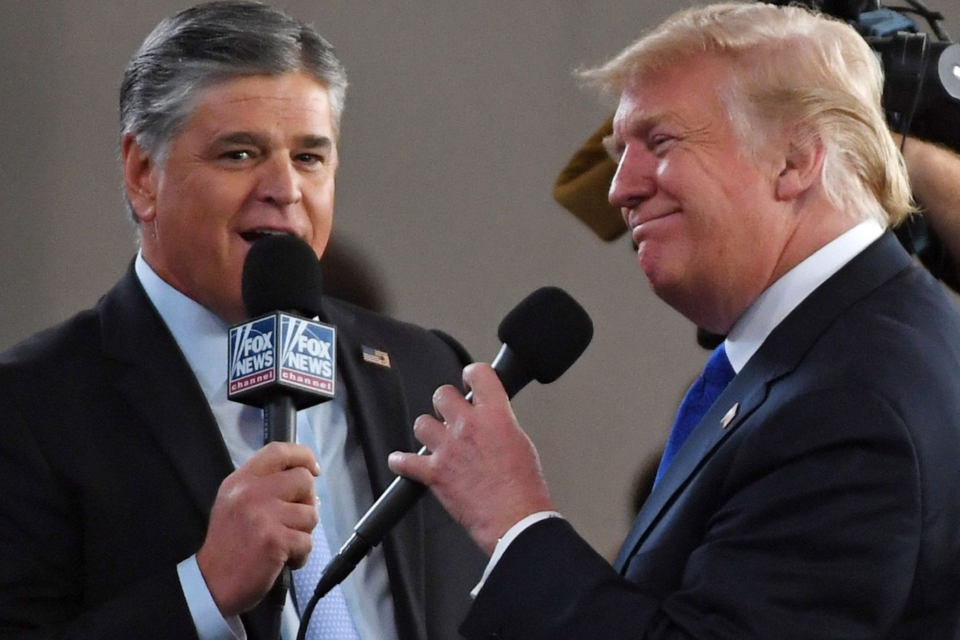
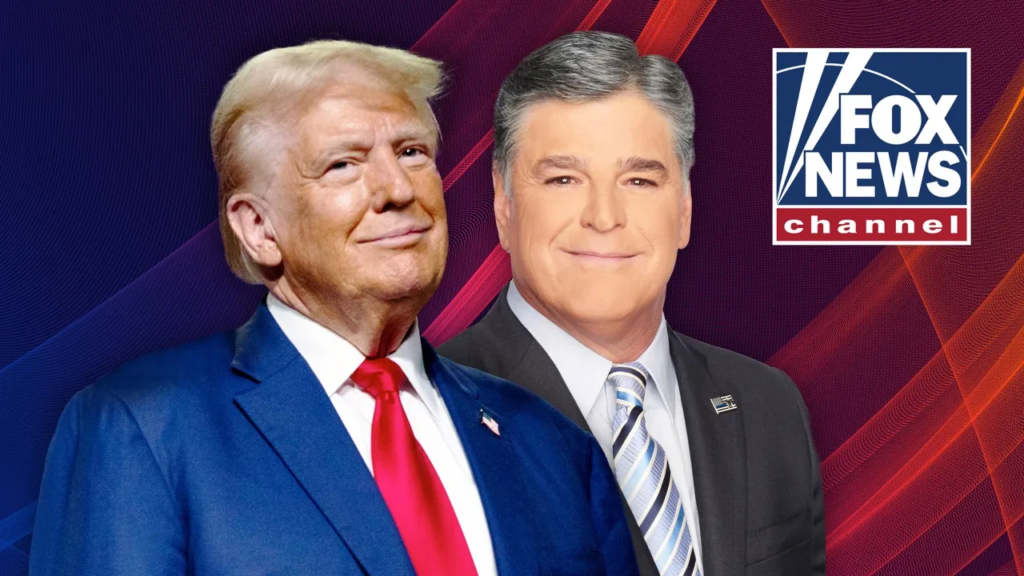
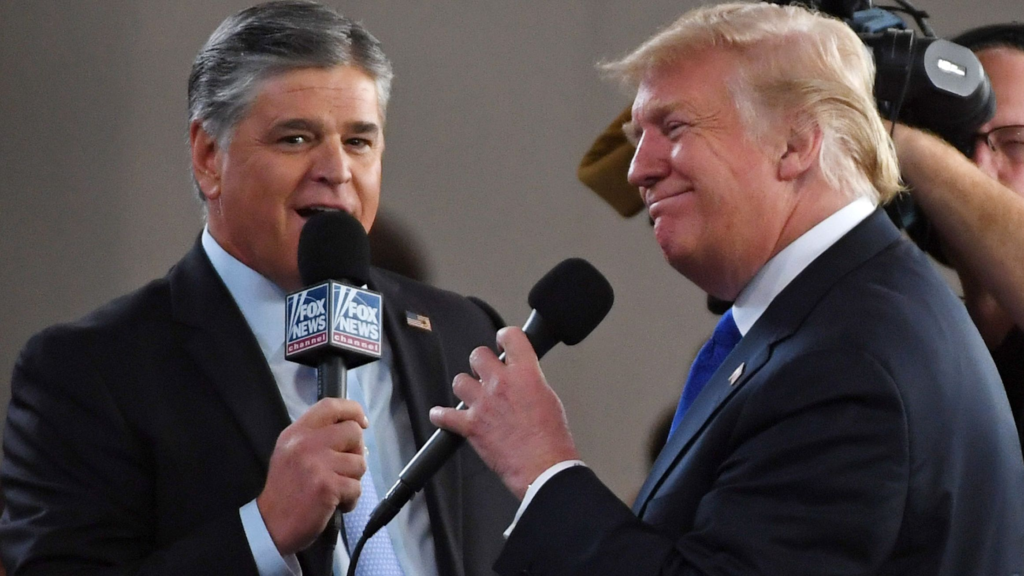
During a high-profile interview with Sean Hannity while visiting China, President Donald Trump once again reignited debate over his combative relationship with the American press.
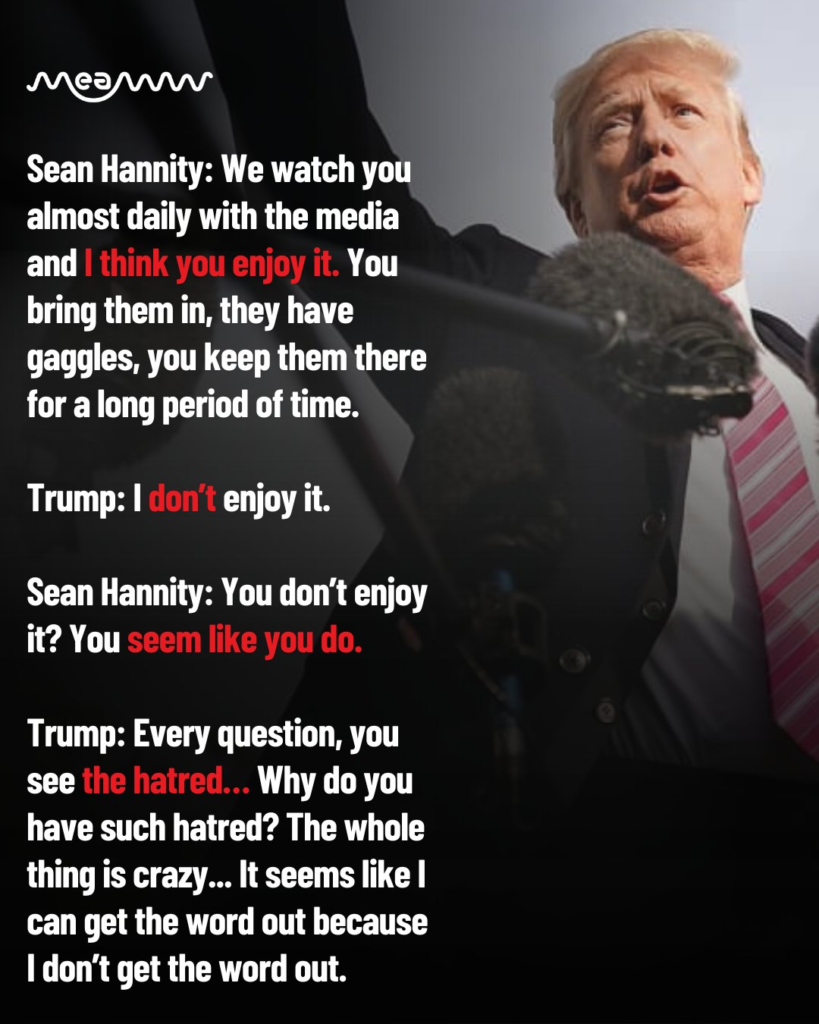
The conversation, which quickly spread across television and social media platforms, centered on Trump’s repeated confrontations with reporters — exchanges that have become one of the defining features of his political career.
Hannity suggested that Trump appears to enjoy battling with journalists during press conferences and public appearances, pointing to the president’s willingness to engage directly with hostile questions in front of cameras.
But Trump pushed back strongly against the characterization.
“I don’t enjoy it,” Trump reportedly said during the interview. “The questions are so full of hatred. What they do is crazy.”
The remark immediately drew attention online, where supporters and critics once again divided sharply over Trump’s ongoing war with much of the mainstream media.
Despite criticizing the tone of reporters’ questions, Trump also acknowledged that the confrontations provide him with a powerful communication advantage. According to the president, hostile press moments often become opportunities to bypass traditional political filters and speak directly to the public.
“It gives me a chance to get the real message out,” he explained.
That duality has long defined Trump’s relationship with the press.
For years, Trump has simultaneously condemned major media organizations while using media attention more aggressively and effectively than almost any modern political figure. His clashes with reporters frequently dominate news cycles, generate viral clips, and energize supporters who believe mainstream outlets treat him unfairly.
Critics, however, argue that Trump intentionally escalates conflict with journalists in order to undermine scrutiny and frame legitimate questioning as political hostility.
The Hannity interview added another chapter to that ongoing national debate.
Broadcast during Trump’s visit to China, the exchange carried additional geopolitical significance. Presidential trips abroad are traditionally moments where American leaders attempt to project strength, diplomacy, and stability on the world stage. Yet even overseas, Trump’s tense relationship with the media remained a central topic.
Observers noted that Trump appeared particularly frustrated with what he described as increasingly aggressive and emotionally charged questioning from reporters covering his administration.
Over the years, Trump has frequently accused major news organizations of spreading misinformation, political bias, and selective narratives designed to damage him politically. Terms such as “fake news” and “enemy of the people” became deeply associated with his presidency and permanently altered the relationship between political leaders and the press in the United States.
Supporters argue Trump exposed long-standing media bias that many Americans already distrusted.
“Trump says what millions of people think every day,” one supporter wrote online after the Hannity interview aired. “The media stopped pretending to be neutral years ago.”
Others praised Trump for refusing to avoid hostile questioning and confronting reporters directly instead of relying solely on prepared statements.
Critics saw the moment very differently.
Media analysts and political opponents argued that attacking journalists undermines democratic accountability and contributes to growing public distrust in factual reporting. Some commentators warned that repeatedly portraying the press as driven by “hatred” risks deepening polarization and hostility toward journalists.
“This constant war with the media damages institutions,” one political commentator posted following the interview. “A president should answer tough questions without treating reporters as enemies.”
Still, Trump’s media strategy has consistently proven politically effective among his core supporters.
Unlike many politicians who attempt to avoid conflict, Trump often leans directly into confrontation. His exchanges with reporters regularly produce viral moments that dominate cable news, social media feeds, and political commentary for days.
In many cases, even critics acknowledgingly amplify those moments by replaying clips repeatedly across television and online platforms.
The Hannity interview also highlighted the uniquely close relationship between Trump and conservative media personalities such as Sean Hannity.
Over the years, Hannity has become one of Trump’s most visible media allies, frequently defending the president against criticism while offering a platform for lengthy, relatively sympathetic interviews. Their conversations often blur the line between traditional journalism and political alliance, something critics have repeatedly pointed out.
Supporters, however, argue that mainstream outlets leave conservative voices little choice but to build alternative media ecosystems where they believe viewpoints receive fairer treatment.
The interview’s location in China added another layer of symbolism.
Trump’s relationship with China has been one of the most consequential and controversial aspects of his political career. From trade wars and tariffs to geopolitical tensions and economic negotiations, Trump has consistently framed himself as tougher on China than previous American leaders.
Conducting a media-focused conversation during such a trip reinforced how inseparable Trump’s communication style remains from his governing identity.
Even while discussing diplomacy abroad, the domestic media battle remained front and center.
Social media reactions to the interview spread rapidly.
Supporters celebrated Trump’s bluntness, describing him as authentic, fearless, and willing to confront institutions they believe have lost public trust. Critics accused him of deflecting scrutiny and portraying accountability as persecution.
Clips of Trump describing media questioning as “crazy” and “filled with hatred” circulated widely across Facebook, TikTok, X, and YouTube, often accompanied by dramatic edits and partisan commentary.
The reaction once again demonstrated how modern politics increasingly revolves around emotionally charged media moments rather than traditional policy discussions alone.
For Trump, those moments are rarely accidental.
Throughout his political rise, he has shown an extraordinary ability to dominate public attention through confrontation, unpredictability, and direct communication. Whether speaking at rallies, posting online, or sparring with reporters, Trump consistently positions himself as battling powerful institutions on behalf of ordinary Americans.
That approach remains enormously influential — and enormously divisive.
To supporters, Trump’s willingness to fight with the press represents strength and authenticity. To critics, it represents an attack on democratic norms and independent journalism.
The Hannity interview ultimately reinforced a reality that has defined American politics for nearly a decade:
Donald Trump’s conflict with the media is no longer just about reporters and politicians. It has become a cultural and political symbol of a much larger national divide over trust, power, truth, and who gets to shape the public narrative in America.