In modern politics, moments of tension rarely stay private.
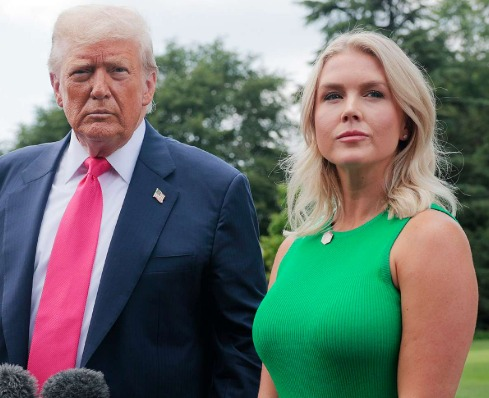
A single remark—especially when delivered publicly—can ripple far beyond the room in which it was spoken. It can shape narratives, influence perceptions, and spark debates that extend well beyond the individuals involved.
That is exactly what happened when Donald Trump reportedly made a pointed comment about his own Press Secretary, Karoline Leavitt.
During a broader discussion about negative media coverage, Trump turned toward Leavitt and said:
“Maybe Karoline’s doing a poor job… You’re doing a terrible job. Should we keep her? I think we’ll keep her.”
The moment, brief but striking, quickly spread across media and social platforms—igniting a wave of reactions that ranged from amusement to criticism, from strategic analysis to deeper questions about leadership and loyalty.
A Comment That Cut Through the Noise
Trump’s relationship with the media has long been defined by conflict.
He frequently criticizes coverage as unfair or biased, often framing negative reporting as evidence of systemic opposition rather than objective scrutiny. This framing has been central to his political messaging for years.
But in this instance, the focus shifted.
Instead of directing criticism outward—toward journalists or media organizations—Trump appeared to redirect it inward, toward a member of his own team.
And that shift is what made the moment stand out.
Because in politics, internal criticism—especially when made publicly—carries a different kind of weight.
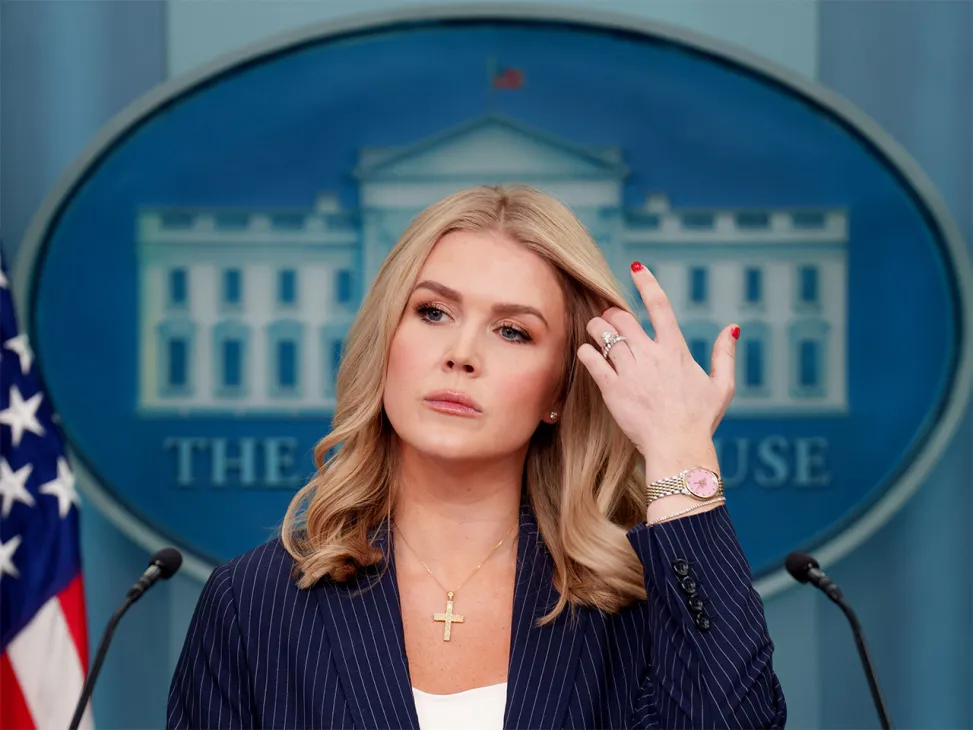
The Role of a Press Secretary
To understand why the comment resonated so strongly, it’s important to consider the role of a Press Secretary.
Figures like Karoline Leavitt are not just communicators.
They serve as:
- The public voice of an administration
- A bridge between leadership and the media
- A defender of policy and narrative
Their job is to interpret, explain, and, at times, protect.
And in doing so, they often operate under intense scrutiny—expected to maintain composure and consistency in the face of constant questioning.
Leavitt, in particular, has been known as a strong and loyal advocate, consistently defending Trump’s positions and messaging.
Which makes the public nature of the criticism all the more notable.
Public Loyalty vs. Public Pressure
One of the defining characteristics of Trump’s leadership style is his emphasis on loyalty.
Over the years, allies and staff members have often been evaluated not just on performance, but on their perceived alignment with his messaging and priorities.
But loyalty in politics is rarely simple.
It exists alongside pressure.
Pressure from:
- Media scrutiny
- Public opinion
- Political opposition
- Internal expectations
And when that pressure builds, moments like this can emerge—moments where frustration becomes visible.
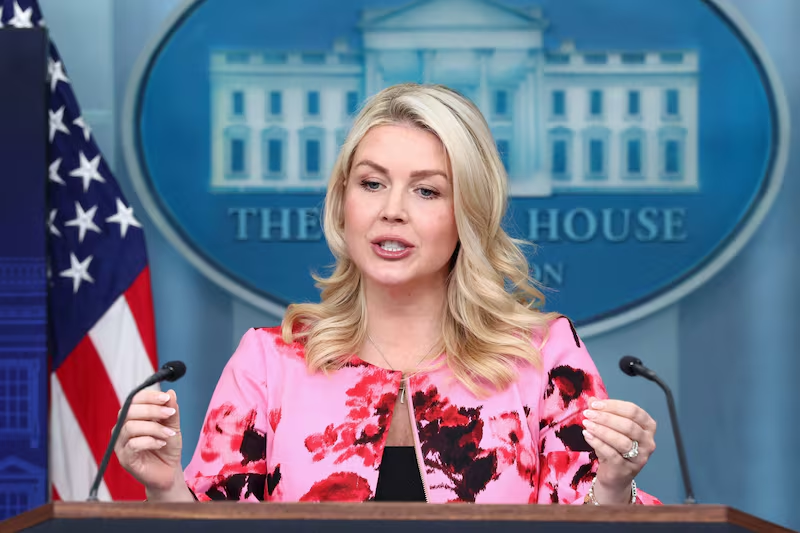
A Pattern or a One-Off?
For some observers, Trump’s comment fits into a broader pattern.
They point to past instances where allies have been publicly criticized or distanced when circumstances became challenging.
From this perspective, the remark is not surprising—it is consistent.
Others, however, see it differently.
They argue that Trump’s communication style has always included blunt, off-the-cuff remarks, often delivered with a mix of seriousness and sarcasm.
From this viewpoint, the comment may be less about actual intent and more about rhetorical style.
The Power of Public Moments
Regardless of interpretation, the impact of the moment is undeniable.
Because public comments—especially those involving internal dynamics—do more than convey information.
They send signals.
Signals about:
- Leadership style
- Team dynamics
- Stability and confidence
And in a political environment where perception matters as much as policy, those signals can shape broader narratives.
Media Reaction and Amplification
Once the comment entered the public sphere, media coverage followed quickly.
Different outlets framed the moment in different ways:
- Some emphasized the tension and framed it as a sign of internal instability
- Others downplayed it, presenting it as typical of Trump’s informal speaking style
- Still others used it as a starting point for broader discussions about leadership and communication
This diversity of coverage reflects a larger reality:
In modern media, the same event can generate multiple, often competing interpretations.
Supporters and Critics: A Familiar Divide
As with many moments involving Trump, reactions were sharply divided.
Supporters argued:
- The comment was not meant to be taken literally
- It reflects a direct, unfiltered communication style
- Public accountability—even within a team—is not necessarily negative
Critics countered:
- Publicly criticizing staff undermines professionalism
- It can create uncertainty and instability
- It reflects a leadership approach that prioritizes blame over cohesion
This divide is not new—but it continues to shape how such moments are understood.
The Human Element
Amid the political analysis, it’s easy to overlook the human aspect.
Behind titles like “Press Secretary” are individuals navigating high-pressure environments.
Moments of public criticism—especially unexpected ones—can carry personal as well as professional impact.
At the same time, those in such roles are also accustomed to operating under scrutiny.
Balancing public responsibility with personal resilience is part of the job.
And moments like this highlight just how demanding that balance can be.
Narrative vs. Reality
One of the most important aspects of this situation is the distinction between narrative and reality.
A single comment can be interpreted in many ways:
- As a joke
- As a criticism
- As a strategic signal
- As a moment of frustration
The narrative that ultimately takes hold depends on:
- Media framing
- Public reaction
- Subsequent actions
And often, those narratives evolve over time.
What Comes Next?
Moments like this rarely exist in isolation.
They become part of a larger story—one that continues to develop with each new statement, decision, or interaction.
Key questions moving forward include:
- Will there be clarification or follow-up?
- How will Leavitt respond, if at all?
- Will this moment have any lasting impact on public perception?
The answers to these questions will shape how this episode is remembered.
A Reflection of Modern Political Communication
Beyond the individuals involved, this moment reflects broader trends in political communication.
Today’s political environment is:
- Fast-moving
- Highly visible
- Intensely scrutinized
Leaders speak directly to audiences through multiple channels, often in real time.
This creates opportunities for authenticity—but also increases the likelihood of moments that spark controversy.
Conclusion: More Than a Single Remark
At its core, the “Should we keep her?” moment is about more than one comment.
It is about how leadership is expressed.
How loyalty is perceived.
And how public communication shapes political reality.
For Donald Trump, it is another example of a communication style that continues to generate both attention and debate.
For Karoline Leavitt, it is a moment that underscores the visibility—and vulnerability—of serving in a high-profile role.
And for the public, it is a reminder that in politics, even a single sentence can open the door to much larger conversations.
Because in the end, it’s not just about what was said.
It’s about what it reveals—and how it’s interpreted.